Do not write everything down
A notebook on a walk can easily become another obligation. It feels as though you must remember names, mark the route, describe the weather and immediately come up with a striking conclusion. Try reducing the task to five lines. A short note forces you to choose what really caught your attention. Start with a detail you would hate to forget: the uneven edge of a shadow, the colour of water between stones, an opening in the clouds. You can use a paper notebook or an ordinary note on a device. Choose whichever is easy to take out and quickly put away again.
Stop away from the road, water or a steep slope before taking out your notebook. If there is nowhere to stop, write down the impression after the walk and mark it ‘from memory’. On the spot, short phrases and abbreviations are useful; you can finish longer sentences at home. Leave some space between the lines for clarifications. If you take a photograph alongside the note, record its number or the time: it will be easier to find the right one among similar frames later.
First line: something to begin with
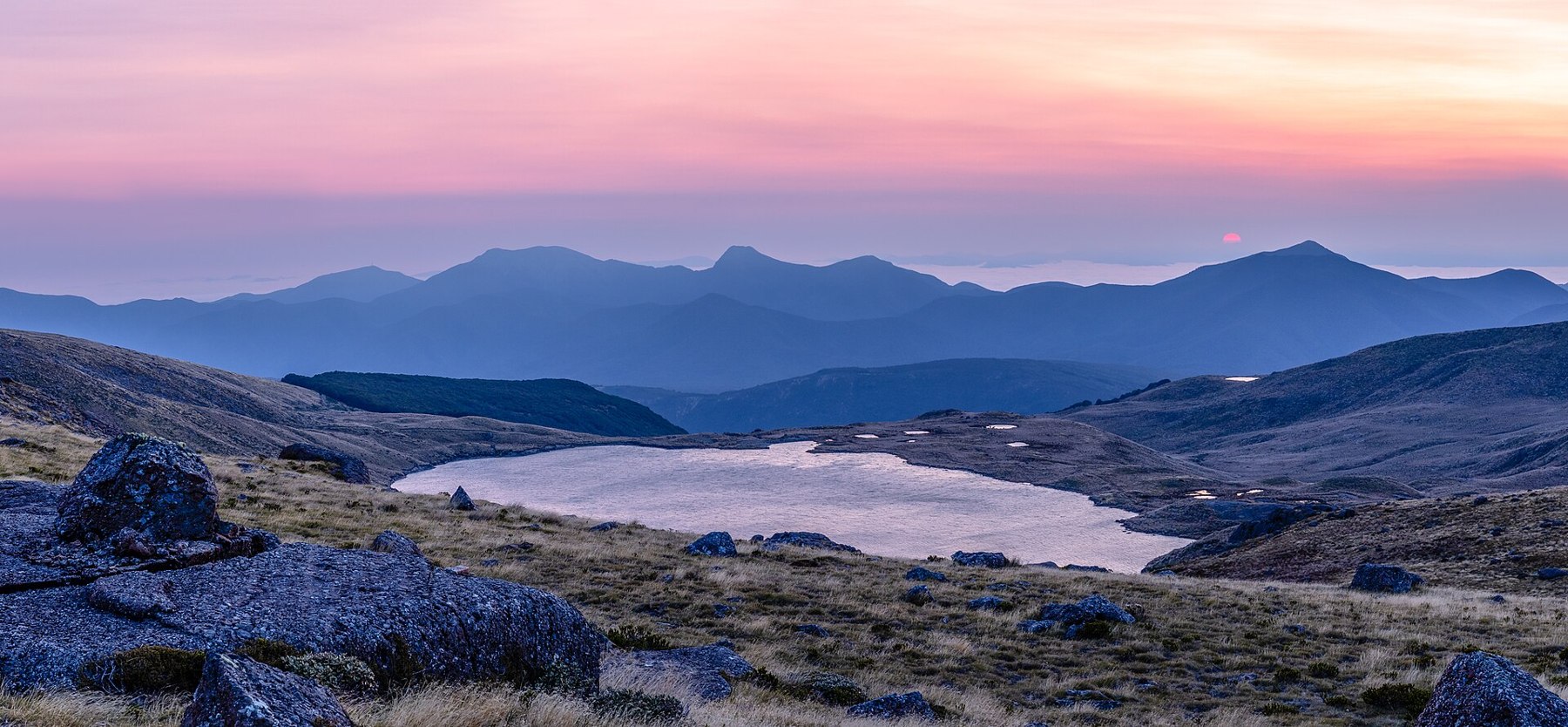
Begin with something you can check with your eyes. Instead of ‘an incredible morning’, write: a narrow pink band lies above the dark slope. Instead of ‘a wild place’: no buildings are visible by the water in this direction. The second version is more precise and draws no conclusions about the whole area. You can add the name of the place separately. If you do not know it, describe your position: view from the path, shore ahead, trees to the right.
In the second line, record the relationship between two details. One is above another, a dark patch repeats in the water, small stones continue the line of a larger one. Avoid listing every object. A sentence like this makes it easier to recover what caught your attention than a list of ‘water, stones, trees’. If nothing comes together, choose the simplest thing: a light surface beside a dark one. Specify where their shared boundary runs: along the shore, across the slope, around a stone.
Third line: a change
For the third line, wait a little or compare the current view with your first impression. What has changed? A cloud has moved, a reflection has broken up, a detail has become more noticeable after a closer look. In the last case, the phrase ‘I now notice’ is useful. If nothing has changed, note exactly what stayed the same: the edge of a shadow on the same stone, or the smooth surface of the water. When you review the photographs, this note will give you a specific point of comparison.
Leave the fourth line for something you do not know. Why is that patch of water a different colour? Where does the visible path end? What is the plant at the edge called? A question does not oblige you to find the answer immediately. You can add a small drawing beside it or the number of a photograph showing the detail. If you later consult a reference book, add the answer beneath the original question and note the source. This keeps clear what you saw on the walk and what you discovered at home.
Fifth line: a reason to return
The last line is a useful place to leave yourself a reason for another observation. Write what you would like to check on a later visit: whether the shoreline will remain as noticeable, what the view looks like without a bright sky, what changes when you walk in the opposite direction. If you cannot return or do not want to, frame a question for a similar place. You could compare reflections from two sides of a path beside another body of water, for example. Next time you go out, simply open this page and choose one unanswered question.
At home, reread the note before looking at the photographs. Underline words that refer to visible details, and mark judgements separately. There is no need to remove feelings: it is enough to know where description ends and your own response begins. If you like, pair the text with one photograph. If the detail you need is not in the frame, keep the note on its own. Save the date and a description of the spot with the text so you can find it among other pages later. Add clarifications alongside the original phrase rather than replacing it. When you return to the same path, you can check both versions of the description.